
'In the luxury car segment, the adoption of EVs is almost double compared to the mass market.'

'We are very quickly going to announce the timeline of our launches, which should start giving us the turnaround'
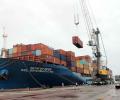
Industry associations and companies in the United States, including the US Chamber of Commerce, Coalition of Services Industries and the iconic bike company Harley Davidson have called on the Donald Trump dispensation to push India to reduce tariffs, non-tariffs, and regulatory barriers to boost American exports.
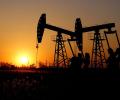
India, the world's third-largest energy consumer and importer, on Wednesday warned of high oil prices hurting the nascent and fragile global economic recovery and floated an idea of long-term supply contracts that provide predictable and stable pricing. Speaking at the India Energy Forum by CERAWeek, Oil Minister Hardeep Singh Puri said there was a mismatch between demand for oil and the supplies producers such as OPEC+ were making and there was a case for raising the production. The world, he said, needs "predictable, stable and affordable" prices for it to recover back to pre-pandemic levels.

Rising crude oil prices and muted passenger traffic in the July-September quarter (second quarter, or Q2) of 2023-24 (FY24) have raised concerns about the profitability of listed aviation players. These two concerns have caused the stock of InterGlobe Aviation (IndiGo), the largest player in the sector, to slip by 11 per cent since its highs at the end of July. Nuvama Research expects yields to cool down in the near term due to seasonality, rising crude oil prices, and higher capacity.
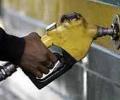
India Inc has said the decision to hike in diesel price was "inevitable" and this would help in fiscal consolidation.
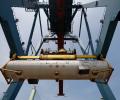
Chinese import tariffs have unwittingly come to India's assistance to help boost imports of US liquefied petroleum gas (LPG) at rates cheaper than what it pays for supplies from West Asia, according to industry sources and shipping data.

India's fuel sales surged past pre-pandemic levels in March on twin impact of the economy rebounding from the lifting of pandemic-related restrictions and anticipation of price increases leading to stocking. In the first two weeks of March, dealers, as well as the public, topped up their tanks in anticipation of an increase in prices that had been on hold in the run-up to the elections in states like Uttar Pradesh. While daily price revisions restarted on March 22, the increases were calibrated.
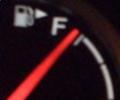
The government last month announced freeing of auto fuel prices from its control, resulting in a Rs 3.50 per litre hike in petrol prices as domestic rates got linked to global movements.
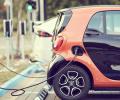
Despite the benefits of hybrid technology, a lack of government backing and few launches have kept the segment from gaining ground.
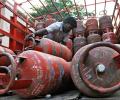
Cooking gas LPG price on Wednesday was hiked by Rs 15 per cylinder in line with a surge in international fuel prices. Rates of both subsidised and non-subsidised LPG prices were hiked, oil company officials said. Cooking gas now costs Rs 899.50 per cylinder in Delhi.

Apple's ambitious strategy to expand iPhone exports, shift more production from China to India at a faster pace, and grow its domestic market hits a Trump-sized roadblock.

While sedan sales have declined in the mass-market segment in recent years, demand remains strong for BMW sedans, which account for 45 per cent of its sales in India.

India's energy ambitions are pushing global coal prices. India's import of coal from South Africa is expected to go up big time in the coming days.

'Trump is good news for us. Energy poverty is real, and fossil fuels are the answer.'

Amid an outcry over record high petrol and diesel prices, Union Finance Minister Nirmala Sitharaman on Saturday said the Centre and state governments will have to together work out a mechanism to bring retail rates to reasonable levels.
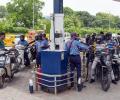
Petrol and diesel price hikes are likely to resume after state elections get over next week to bridge the Rs 9 a litre gap created by international oil prices soaring past $100 a barrel. International crude oil prices shot above $110 a barrel for the first time since mid-2014 on fears that oil and gas supplies from energy giant Russia could be disrupted, either by the conflict in Ukraine or retaliatory western sanctions. The basket of crude oil India buys rose above $102 per barrel on March 1, the highest since August 2014, according to information from the Petroleum Planning and Analysis Cell (PPAC) of the oil ministry.
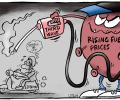
Petrol price on Thursday was hiked by 35 paise per litre and diesel by 15 paise, pushing rates to a new high across the country. Petrol in Delhi now costs Rs 101.54 a litre and diesel Rs 89.87 per litre, according to a price notification of state-owned fuel retailers. The increase comes after rates stayed mute for three days. Petrol price was last hiked on July 12, on a day when diesel rates had seen its first reduction in almost three months. The increase on Thursday neutralised the 16 paise price cut in diesel on July 12.
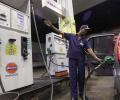
Since May 1, the dynamic fuel pricing model has been applied on a pilot basis in 5 cities

The wide-ranging sanctions imposed by the US on the Russian oil sector have started to dent near-term oil flows to India with state-owned Bharat Petroleum Corporation Ltd (BPCL) saying not enough cargoes are available for March.
The government on Monday scrapped 30-month old windfall profit tax on domestically-produced crude oil and on export of jet fuel (ATF), diesel and petrol following a decline in international oil prices. Minister of State for Finance Pankaj Chaudhary tabled a notification in Rajya Sabha scrapping the levy on crude oil produced by firms like state-owned Oil and Natural Gas Corporation (ONGC) and exports of fuels done by companies like Reliance Industries Ltd.
The Reserve Bank on Friday retained inflation projection at 4.5 per cent for the current financial year, lower than 5.4 per cent in the last fiscal. Assuming a normal monsoon this year, CPI (consumer price index-based) inflation for the current year is projected at 4.5 per cent, with Q1 at 4.9 per cent, Q2 at 3.8 per cent, Q3 at 4.6 per cent, and Q4 at 4.5 per cent.
Finance Minister Pranab Mukherjee on Friday said surging food and fuel prices amid weak global economic growth are adversely impacting GDP growth of the country.

India, the world's third largest oil consuming and importing nation, in July bought $2.8 billion worth of crude oil from Russia, second only to China which remains the largest importer of Russian oil, a report said. Russia emerged as India's biggest supplier of crude oil, which is converted into fuels like petrol and diesel in refineries, after Russian oil was available on discount following some European nations shunning purchases from Moscow over its invasion of Ukraine in February 2022.

However, copious oil supplies amid growing global output and slowing Chinese oil consumption will put India in a better bargaining position with Gulf suppliers.
Prime Minister Dr Manmohan Singh addressed the media persons onboard Air India One on his return from G-20 Summit in Toronto.
Wholesale price inflation eased to 2.05 per cent in March, as against 2.38 per cent in February, government data showed on Tuesday. The wholesale price index (WPI) based inflation, however, rose year-on-year.
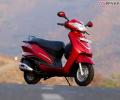
If you are looking for a comfortable ride on bustling Indian roads without having to worry about fuel average, we have got these five options for you.
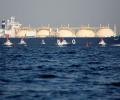
Tightening Russian gas supplies to Europe has led to scramble for tankers before winter sets in.
Weighed down by surging jet fuel prices, Air-India's net profit plunged by a huge 82.54 per cent at Rs 16.29 crore (Rs 162.9 million) for the year 2005-06.
Adversity often brings out the best in companies, even state-owned ones. Faced with a bloated fuel bill, companies are busy devising new ways to control costs. These range from cut in travel to shift to cheaper fuels and even reduced recruitment. Power equipment maker Bharat Heavy Electricals Ltd has a brand new strategy in place -- it will set up onsite fabrication units rather than transport equipment over long distances.

Retail inflation dipped marginally to a nearly six-year low of 3.34 per cent in March due to a decline in prices of vegetables and protein-rich items. The Consumer Price Index (CPI) based inflation was 3.61 per cent in February and 4.85 per cent in March last year.

Brokerages expect a further slowdown in Indian firms' revenue and earnings growth in Q4FY25, following low single-digit growth in the preceding three quarters, as factors like weak consumer demand and credit growth linger on.

India has recorded the second-highest increase in domestic airfares in the Asia-Pacific (APAC) and West Asian regions, climbing by 43 per cent in the first half of 2024 compared to pre-pandemic levels in 2019, second only to Vietnam (63 per cent). India ranks third in fare increases during the same period in international skies, behind the United Arab Emirates (UAE) and Malaysia. The airfare study conducted by Airports Council International (ACI), which represents 617 airports in this region, was done in partnership with Flare Aviation Consulting.
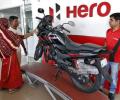
The two-wheeler segment has shown signs of recovery in the first half (H1) of calendar year (CY) 2024, largely driven by improving performance in rural areas. According to the Federation of Automobile Dealers Associations, rural contribution to two-wheeler sales surged by 57-60 per cent in the April-June quarter of 2024-25, indicating a rising demand in these regions. Experts believe that this trend will continue, supported by a favourable monsoon season and government initiatives aimed at rural development.
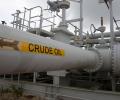
The basket of crude oil that India buys has hit a decade high of $121 per barrel, but retail selling prices of petrol and diesel continue to remain frozen. The Indian basket on June 9 touched $121.28, matching levels seen in February/March 2012, according to data available from the oil ministry's Petroleum Planning and Analysis Cell (PPAC). As per the PPAC, the Indian basket of crude oil averaged $111.86 per barrel between February 25 and March 29 - the immediate period after Russia's invasion of Ukraine sent oil on fire.
Global warming threat has forced all developing nations to go for bio-fuel in a big way. The case of India is also not different.
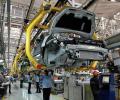
Total vehicle retail sales in India rose 27 per cent year-on-year to 22,06,070 units in April as all segments, including passenger vehicles and two-wheelers, witnessed growth, industry body FADA said on Wednesday. The overall vehicle registrations stood at 17,40,649 units in April 2023. Passenger vehicle retail sales rose 16 per cent to 335,123 units last month as compared to 289,056 units in the same month last year.

Today beef, tomorrow namaz, the third day Sunday mass the fourth day hijab, the fifth day halal, the sixth day love jihad will always be the issues on hand, asserts Aakar Patel.

Gold future prices sustained upward trend for the fourth straight session by surging Rs 2,048 to hit a fresh record high of Rs 100,000 per 10 grams as investors rushed to safe havens after US President Donald Trump indicated plans to overhaul Federal Reserve amid continuing global trade war jitters. On the Multi Commodity Exchange (MCX), the August delivery contract of the yellow metal bounced by Rs 2,048 or 2.1 per cent to hit a fresh peak of Rs 100,000 per 10 grams in the mid-session trade.
